
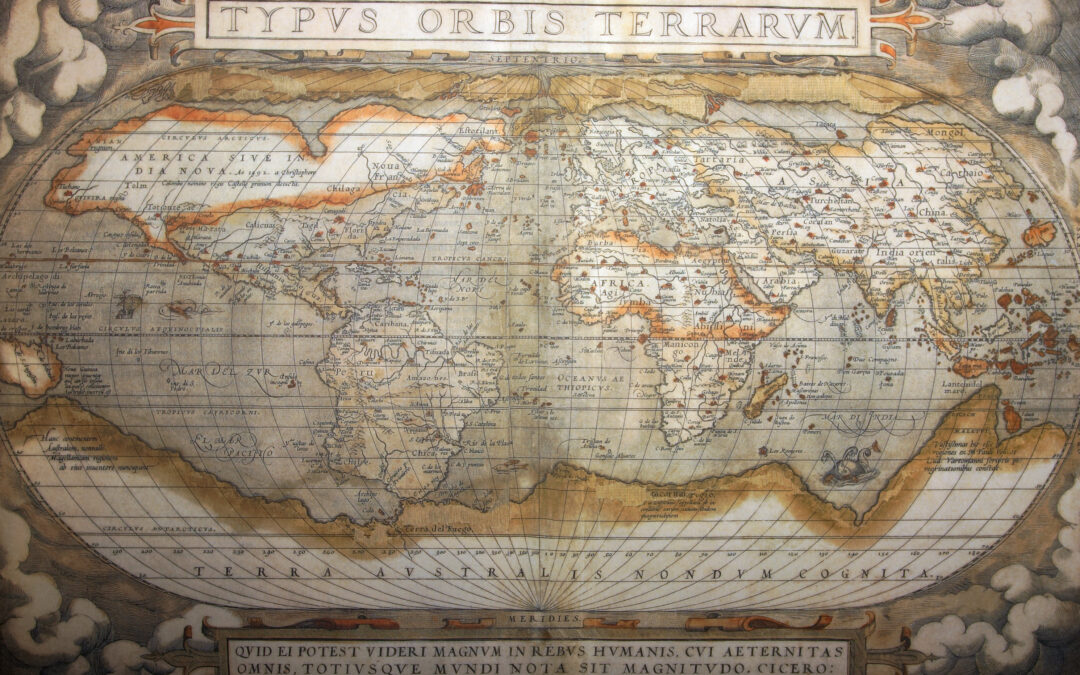
Oversized maps, architectural drawings, murals, large paintings, wall-mounted works, and panoramic photographic materials present unique digitization challenges. Standard flat workflows often do not scale safely or accurately to large-format materials. Institutions must consider geometry, lighting uniformity, distortion control, and safe handling simultaneously — and the equipment they choose has to be up to all of it at once.
This article outlines best practices for large-format and oversized material digitization, including the infrastructure choices that make the difference between a workflow that struggles and one that scales.
The Core Challenge: Scale Changes Everything
Most standard copy stands and digitization systems are designed around typical document and book sizes. When collections include elephant folios, rolled maps, large-format textiles, or oversized artworks, those systems quickly hit their limits — not just in capture area, but in the ability to maintain parallelism, lighting uniformity, and material support at scale.
Institutions tackling large-format collections need to think carefully about capture strategy, physical infrastructure, and material handling as an integrated system rather than a set of independent variables.
Determine Capture Strategy: Single Shot vs. Stitching
Large-format objects can be digitized using single-shot capture with ultra-high-resolution sensors, multi-shot stitching workflows, or a hybrid approach depending on resolution requirements. Single-shot workflows reduce stitching complexity but require sufficient sensor resolution and field of view to cover the full object. Stitching workflows increase flexibility but demand precise alignment and controlled overlap at every frame — and add meaningful time to post-processing.
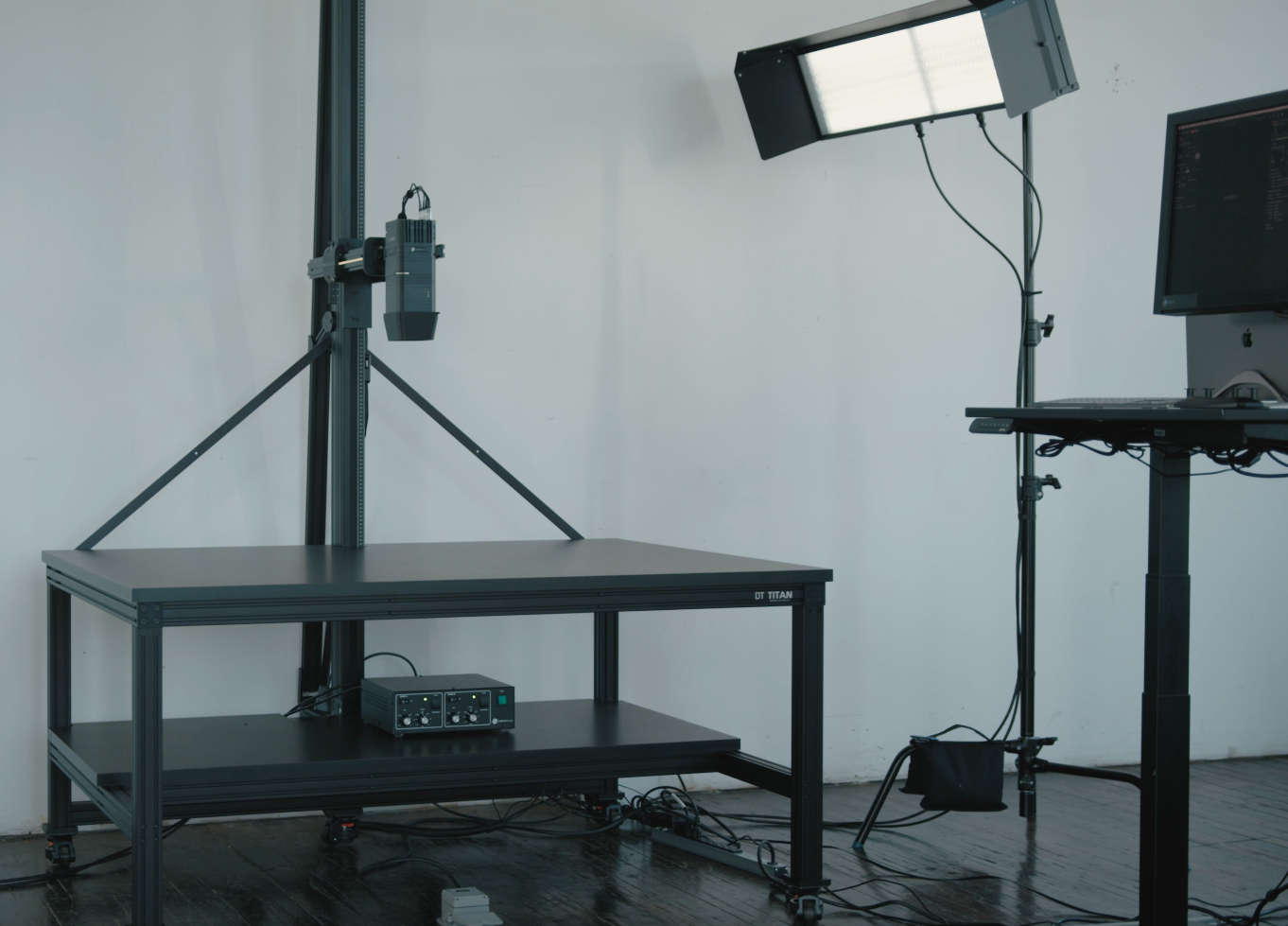 Where possible, single-shot capture on a purpose-built large-format system is the more efficient and consistent path. DT’s DT Titan — the heritage industry’s first 40″ x 60″ digitization system — was designed specifically to enable single-shot capture of materials that would otherwise require stitching, without sacrificing the precision or workflow integration that preservation-grade work demands.
Control Geometric Distortion
For oversized materials, distortion becomes both more visible and more consequential — particularly for architectural drawings and maps used for measurement or reproduction, where dimensional accuracy is as important as visual fidelity. Best practices include high-quality macro or repro lenses, precise camera-to-object parallelism, laser alignment tools, lens calibration profiles, and fixed camera positions with minimal vibration.
The DT Titan addresses this directly. The system is built on solid, precision-laser-aligned aerospace-grade aluminum and pairs with the DT AutoColumn XXL, which provides 0.01″ precision camera positioning controllable entirely from within Capture One CH. Vibration-dampening casters keep the platform stable during capture while still allowing the system to be repositioned within a facility as needed. The result is a system where camera-to-object geometry is repeatable and verifiable — not something operators have to manually re-check between sessions.
Lighting Uniformity Across Large Surfaces
Large objects require even light distribution across the entire capture area, matched color temperature across all fixtures, carefully positioned angles to avoid specular highlights, and cross-polarization where needed. Uneven lighting introduces correction complexity, increases post-processing time, and reduces overall workflow efficiency. As with the stand itself, lighting for large-format work has to be planned as part of the system — not added as an afterthought.
DT works with each institution to select the appropriate lighting solution for their specific material types and lab environment, ensuring the lighting configuration integrates seamlessly with the Titan’s capture footprint.
Handling the Largest and Most Difficult Materials
Oversized materials are often also structurally unstable — prone to curling, waviness, or fragility that makes flat capture difficult without introducing handling risk. Effective large-format workflows require solutions for flattening and supporting materials safely, without the kind of direct pressure that can damage delicate originals.
The DT Titan offers an optional multi-gated vacuum table that holds materials flat across the full 40″ x 60″ capture surface. For particularly difficult materials, the system also supports both direct and indirect magnet use. Indirect magnet techniques — using mylar straps or filaments held in place by magnets — allow rapid repositioning and tensioning without magnets ever contacting the material itself. This is especially valuable for fragile or rare items where any direct contact carries risk.
AutoPPI and Software Integration
One of the less-discussed challenges of large-format digitization is the time cost of camera setup and adjustment. With tall columns and large capture areas, repositioning the camera, re-checking focus, and confirming PPI can consume significant production time — and introduce inconsistency between sessions if not managed carefully.
The DT Titan’s AutoColumn XXL integrates directly with the Phase One iXG and Phase One iXH cameras via Capture One CH to provide AutoPPI — allowing operators to set the camera height and focus to a target PPI with a single click, entirely from the workstation. There’s no need to manually adjust the column, climb a ladder, or physically touch the camera between captures. This level of software integration reduces setup time, eliminates a common source of operator inconsistency, and is meaningfully safer for both materials and staff.
In-Situ Digitization for Immovable Works
Murals and permanently installed works often require field capture rather than lab-based workflows. This calls for portable camera systems, stable tripods or floor stands, controlled ambient light environments, and wall-mounted columns for vertical flexibility. Planning for environmental controls is essential for achieving consistent results outside the lab. The DT Titan’s caster-mounted base also allows it to be repositioned within a facility when materials cannot easily be moved to a fixed capture station.
Resolution Planning
Resolution requirements should be determined by intended reproduction size, research or measurement needs, institutional standards, and applicable compliance frameworks such as FADGI or ISO. Over-capturing wastes storage and processing time; under-capturing limits future usability. Establish resolution targets before production begins — and verify that the system you select can achieve them consistently across the full capture area, not just at the center of the frame.
Conclusion
Digitizing oversized materials requires a balance of precision engineering, lighting control, safe handling, and workflow planning. With proper infrastructure — including a system purpose-built for the scale demands of large-format collections — institutions can produce geometrically accurate, color-faithful digital surrogates that preserve both the aesthetic and technical integrity of their most challenging materials.
The DT Titan was designed to meet exactly those demands: a 40″ x 60″ precision digitization platform that brings the same workflow integration, camera compatibility, and preservation-grade standards as DT’s full product line — at a scale the heritage industry hadn’t seen before.
More Information
For more information on the DT Titan or a free consultation on oversized and large-format digitization strategies for your institution, contact us.
Related resources