
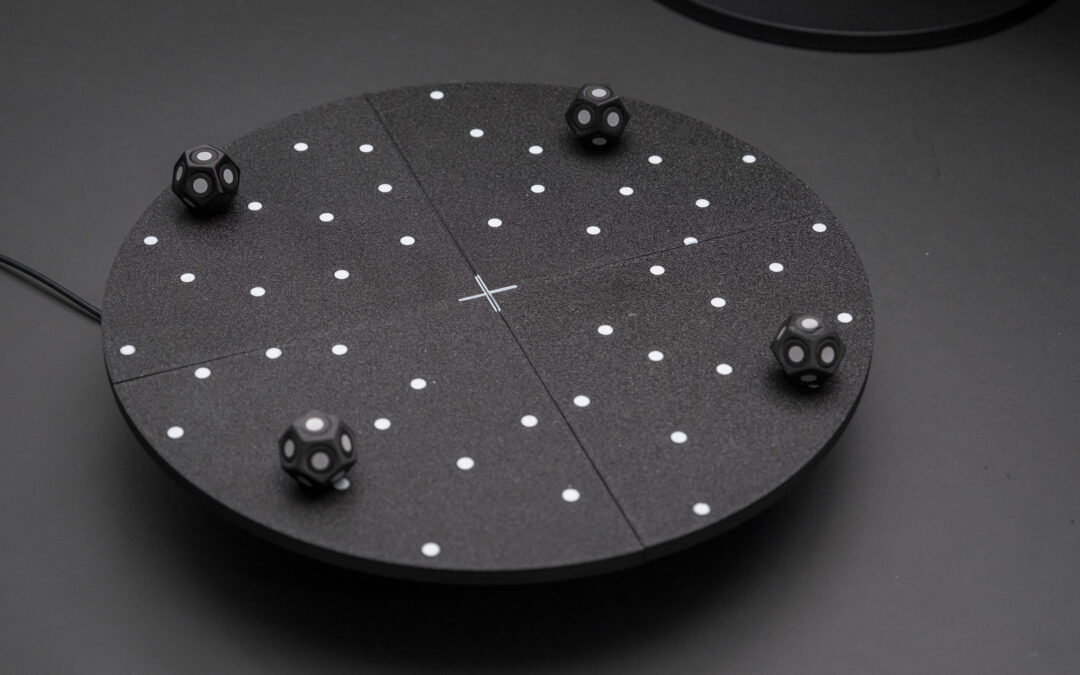
While most digitization programs focus on two-dimensional imaging, a growing number of institutions are exploring advanced imaging techniques to capture surface detail, three-dimensional structure, and material characteristics that traditional photography cannot fully represent.
Technologies such as Reflectance Transformation Imaging (RTI), photogrammetry, structured-light scanning, multispectral imaging, and focus stacking are expanding how cultural heritage materials can be documented, studied, and shared. This article outlines each approach and how they fit into broader digitization programs.
Reflectance Transformation Imaging (RTI)
RTI is a computational imaging technique that captures surface texture and fine detail by photographing an object under multiple controlled lighting angles. The resulting dataset allows researchers to dynamically relight the object in software, revealing surface features that are often completely invisible under standard viewing conditions.
RTI is particularly valuable for inscriptions and engravings, coins and medals, fossils, archaeological artifacts, and damaged manuscripts where surface topology carries significant informational content. By separating shape and texture data from the photograph itself, RTI provides analytical perspectives that no single static image — regardless of resolution — can replicate.
Photogrammetry
Photogrammetry creates three-dimensional models by combining many photographs taken from different angles around an object. Specialized software analyzes the overlapping images and reconstructs a 3D mesh representing the object’s shape and surface texture, typically with high geometric accuracy.
Applications include sculptures and artifacts, archaeological objects, museum exhibits, and historical tools and instruments. One of photogrammetry’s practical advantages is that it can be executed using standard photographic equipment — making it one of the more accessible entry points into 3D documentation for institutions that already have camera-based digitization infrastructure in place. For institutions working with three-dimensional and sculptural collections, DT’s Sculpture & Decorative Arts imaging solutions provide relevant context for how these workflows integrate with standard digitization programs.
Structured-Light and Laser Scanning
Structured-light scanners and laser scanners capture extremely precise geometric measurements by projecting patterns or laser beams onto an object and recording how those patterns deform across the surface. These technologies are used when dimensional accuracy is the primary requirement — architectural documentation, artifact conservation analysis, and engineering heritage objects where physical measurements matter as much as visual appearance.
The resulting data captures geometric detail at a level of precision that photogrammetry typically cannot match, making these tools the appropriate choice for conservation and technical analysis contexts even when photogrammetry suffices for general documentation.
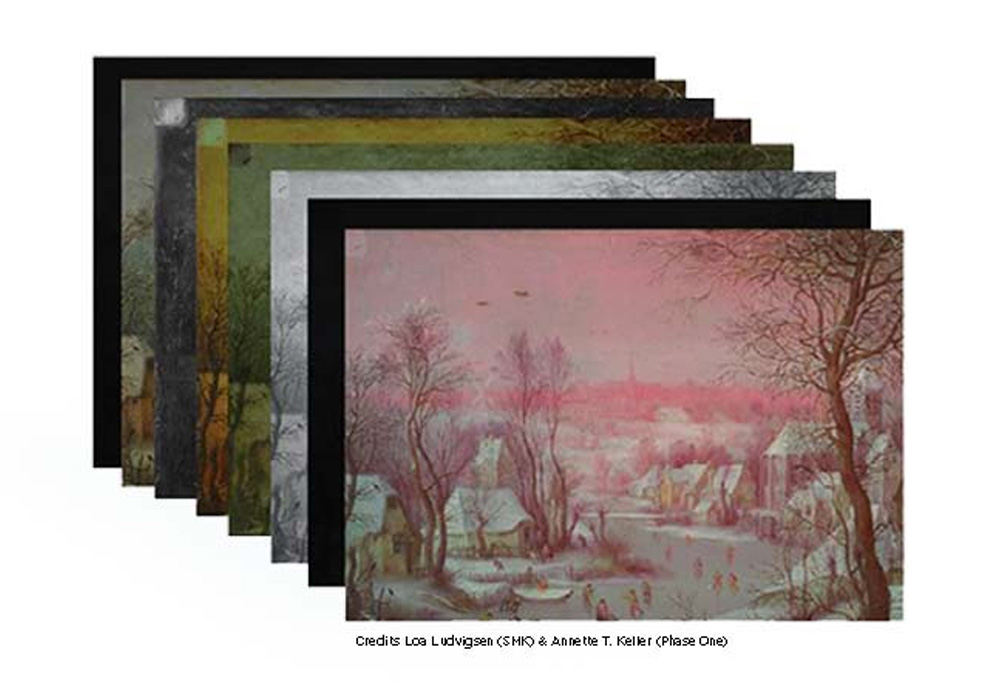
Multispectral Imaging
Multispectral imaging captures reflected or transmitted light across multiple wavelength bands — including ranges outside the visible spectrum, such as ultraviolet and near-infrared. The technique reveals material properties and hidden content that standard photography cannot detect: underdrawings beneath painted surfaces, faded or erased text, previous restorations, and pigment identification.
For institutions working with manuscripts, paintings, or other materials with complex surface histories, multispectral imaging is one of the most powerful tools available for research and conservation. DT offers two multispectral imaging solutions: the DT RCam MultiSpectral Camera, designed for high-resolution multispectral capture, and the Phase One Rainbow Multispectral Imaging Solution, which combines Phase One’s imaging technology with a comprehensive multispectral workflow. Both integrate with DT’s broader digitization ecosystem, making multispectral imaging an extension of a standard program rather than an entirely separate infrastructure investment.
Focus Stacking for Microscopic Detail
Focus stacking combines multiple images captured at different focus distances to produce a single image with extended depth of field across the full subject. This technique is valuable for botanical specimens, insect collections, scientific artifacts, and manuscripts with textured surfaces — any object where the shallow depth of field inherent in close-up photography would leave significant portions of the subject out of focus in a single capture.
Focus stacking allows small objects with complex three-dimensional surfaces to be documented with a level of clarity that no single-exposure photograph can achieve, and it can be implemented with existing camera-based digitization equipment using appropriate software.
For more on focus stacking, watch our “Focus Stacking” webinar here.
Integrating Advanced Imaging with Traditional Digitization
Advanced imaging methods are most effective when integrated into broader digitization workflows rather than treated as standalone specialty projects. Institutions increasingly combine standard high-resolution photography, RTI datasets, 3D models, and multispectral imaging to create comprehensive digital representations of their most significant materials. Each technique captures a different dimension of the object — together, they build a digital record that serves preservation, research, and public engagement in ways that no single approach can.
The practical implication is that institutions don’t need to adopt all of these technologies at once. Starting with a strong standard digitization program and adding advanced techniques selectively — where the material warrants the investment — is typically the most sustainable path.
Balancing Complexity with Accessibility
Advanced imaging technologies can require specialized expertise, dedicated equipment, and significantly larger storage infrastructure than standard digitization workflows. Institutions evaluating these techniques should assess research value against equipment cost, data storage requirements, and staff training needs before committing.
The calculus is becoming more favorable over time. Costs are declining, workflows are maturing, and community knowledge is growing. But careful planning remains essential to ensure that advanced imaging complements rather than complicates the core digitization program.
Conclusion
Emerging imaging technologies are expanding how cultural heritage materials are documented, studied, and shared. Techniques such as RTI, photogrammetry, multispectral imaging, and 3D scanning provide deeper insight into objects that cannot be fully understood through traditional photography alone. As these technologies become more accessible, they will play an increasingly important role in digital preservation and research — and institutions that build familiarity with them now will be well positioned as that access continues to grow.
More Information
For more information on advanced imaging solutions for your collection, contact us.
Related resources