
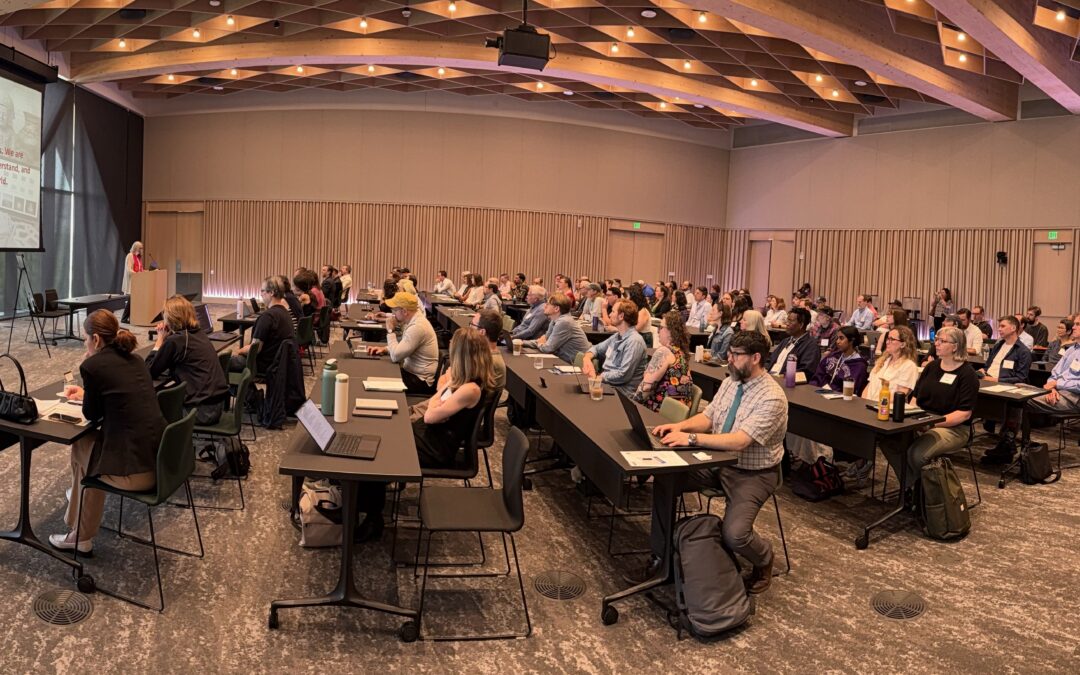
Archiving 2026, the IS&T conference that brings together imaging scientists, conservators, curators, and digitization program managers from across the cultural heritage world, landed in Boston this July — the first year the conference has been held at Harvard’s David Rubenstein Treehouse on the university’s Allston campus. Doug Peterson and Todd Schweikert of Digital Transitions were there for all four days, teaching, exhibiting, and catching up with the community that shapes where this field is headed next.
Doug Peterson Back in the Classroom — Twice
Doug Peterson, DT’s Head of R&D, returned to Archiving to lead two Short Courses on the conference’s opening day.
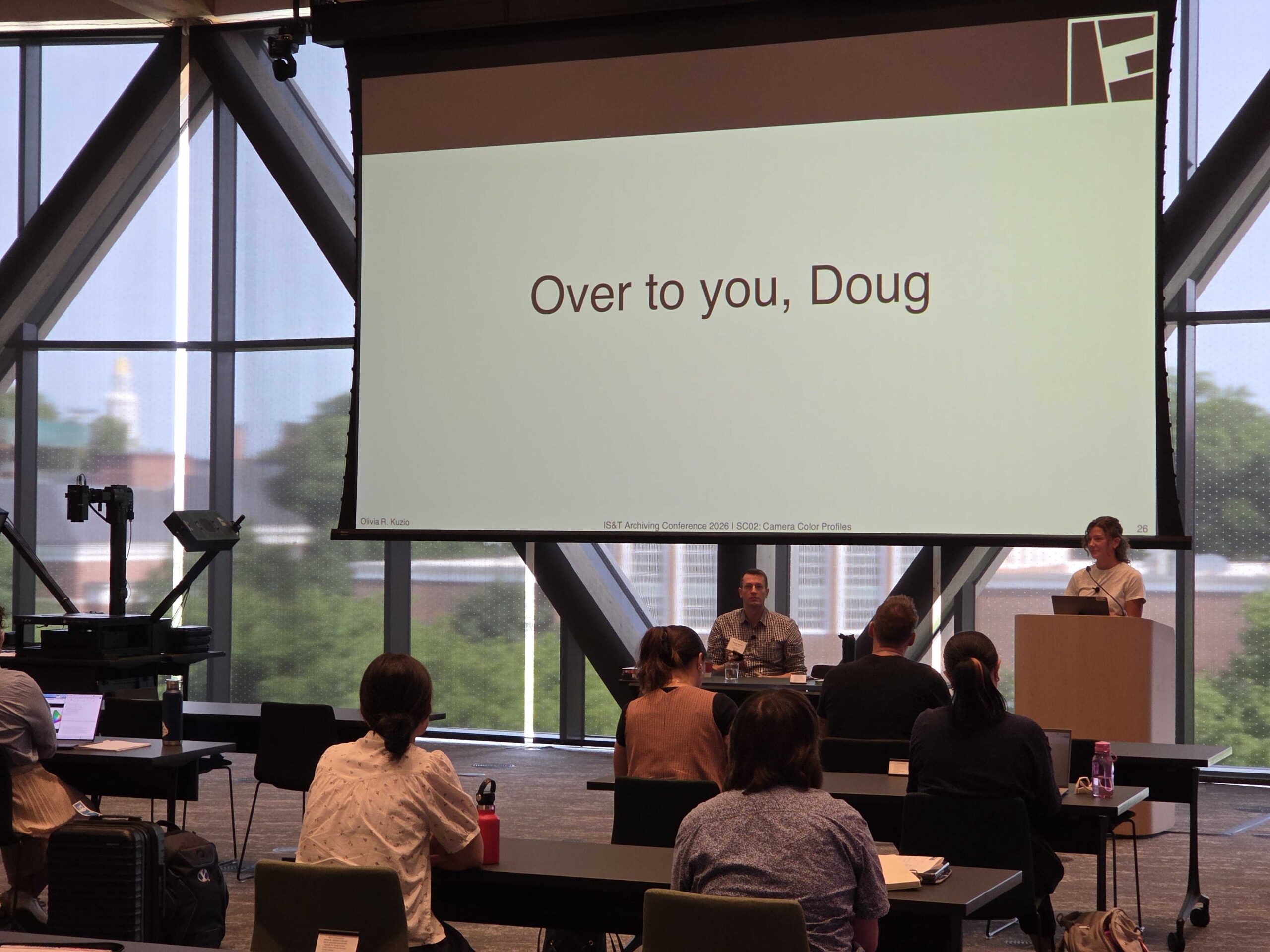
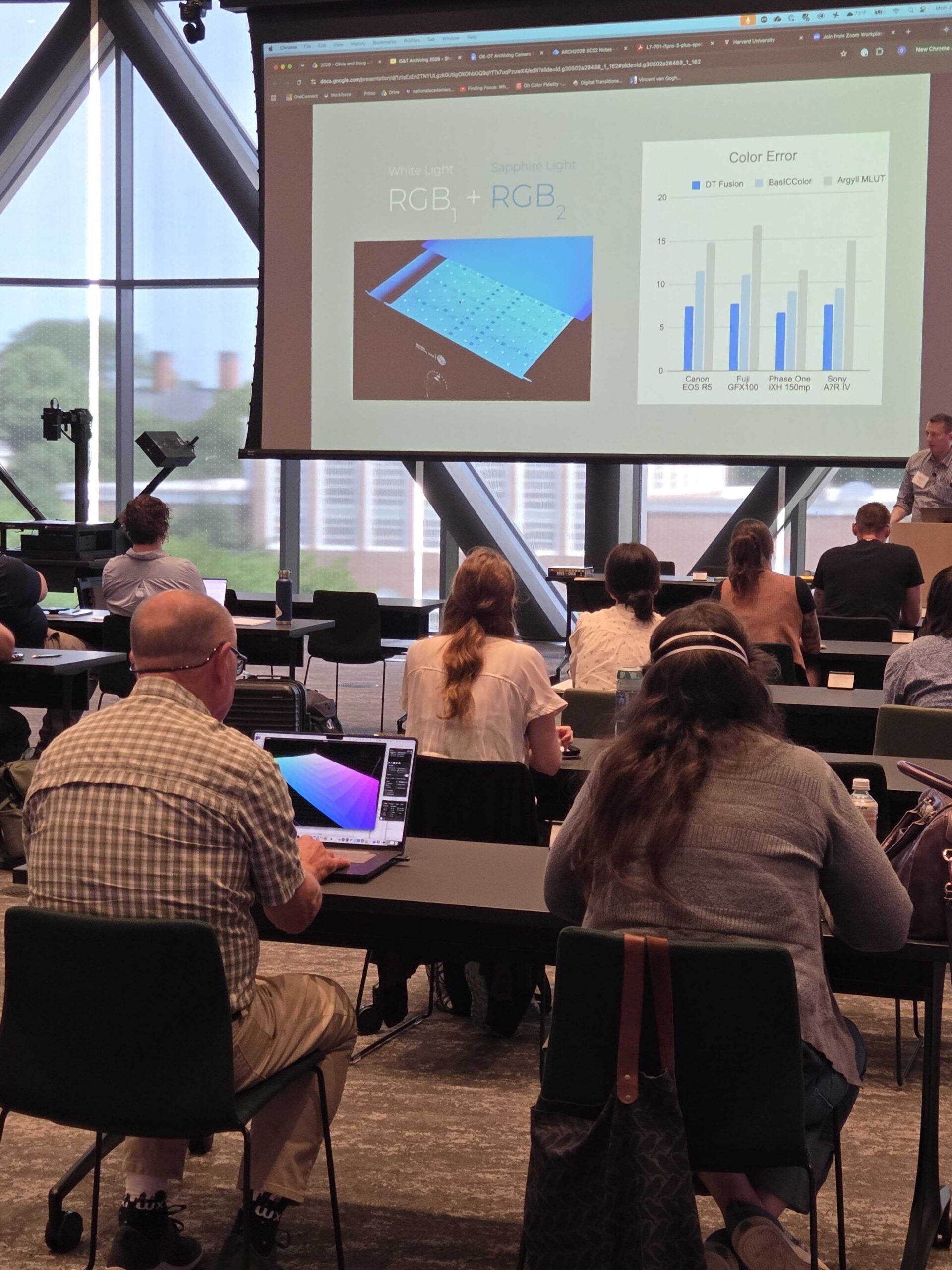
The first, Camera Color Profiles: The Theory, Practice, and Pitfalls, was co-taught with Olivia Kuzio of the J. Paul Getty Trust. The four-hour session dug into the science behind camera profiling for both reflective and transmissive materials — what color actually is, why a camera needs help reproducing it accurately, and how to build a profile that holds up across real subject matter rather than one that simply posts a good deltaE number in a lab test. Attendees walked through the CIE chromaticity diagram, gamut mapping, and a side-by-side comparison of color error across several camera systems and profiling methods.”
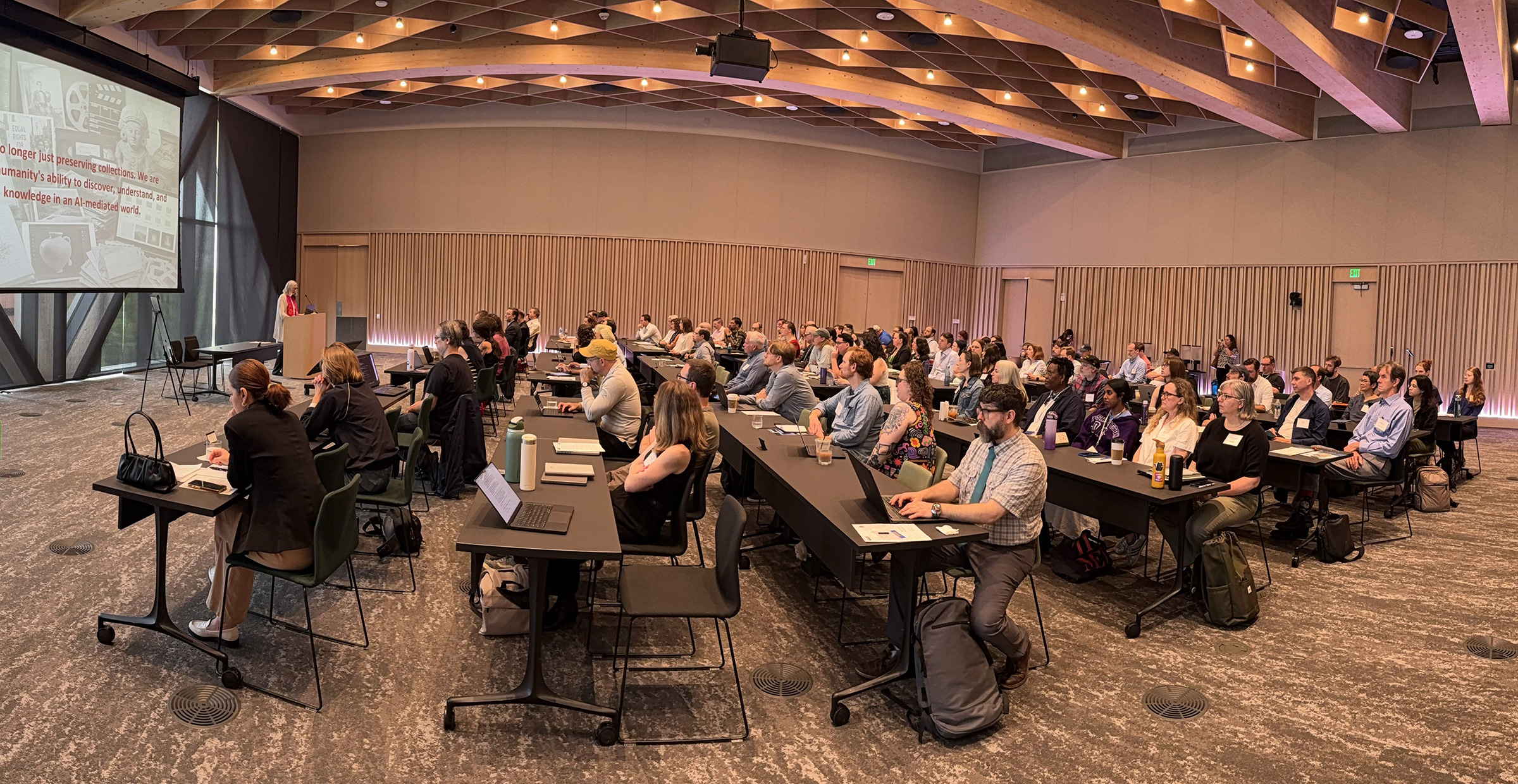
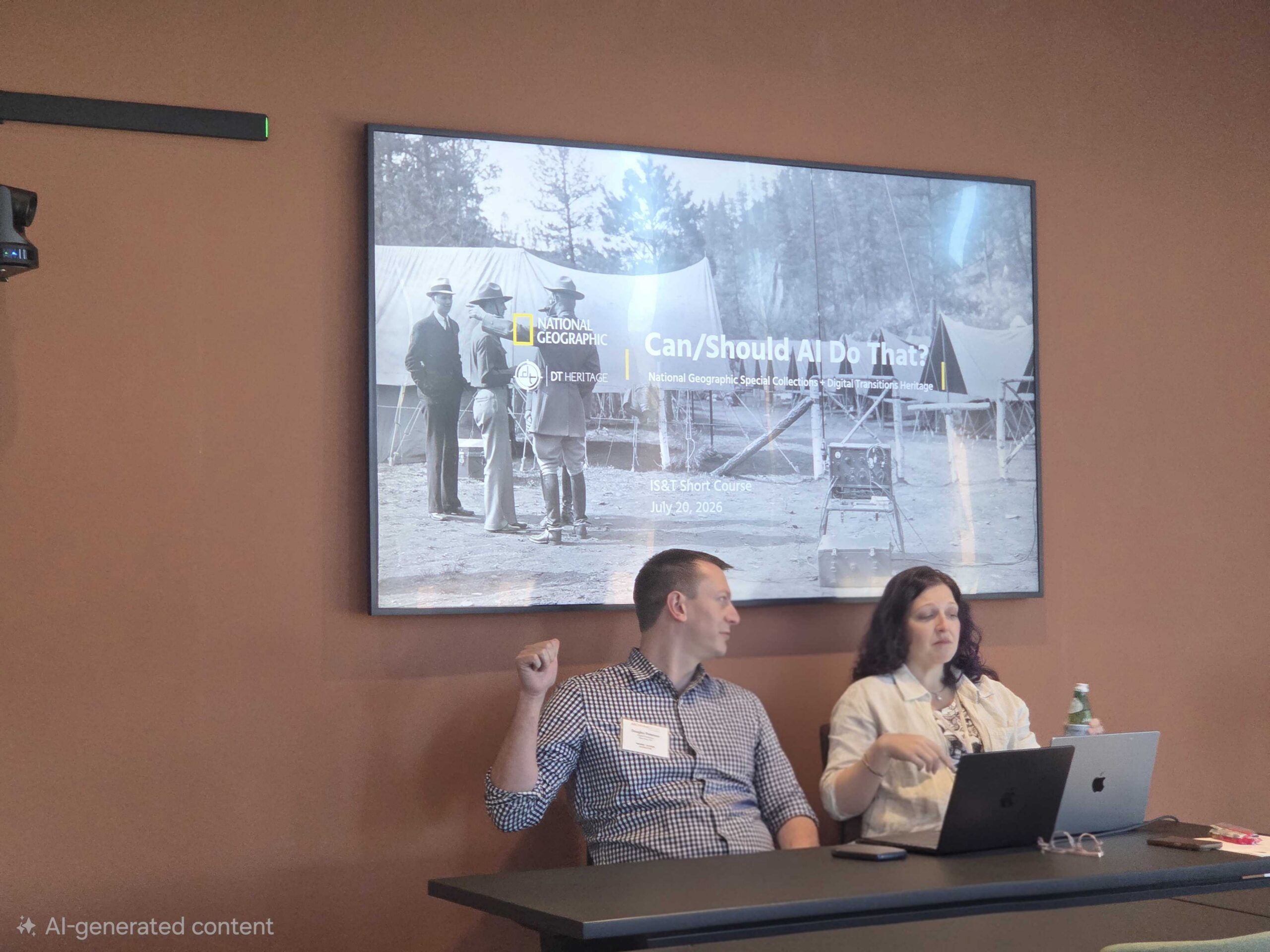
Later that evening, Doug teamed up with Julie McVey, Director of Digital Collections for the National Geographic Society’s Special Collections, for Can/Should AI Do That? Heritage Digitization Use Cases for AI. The room was full. What stood out wasn’t just the turnout — it was how far the questions have moved. A few years ago, an AI course at a conference like this would spend most of its time on the basics. This year, the conversation was almost entirely about implementation: how to scope a real project, how to evaluate a vendor, and, increasingly, who owns content once it has passed through a model.
A Working Capture Station on the Show Floor
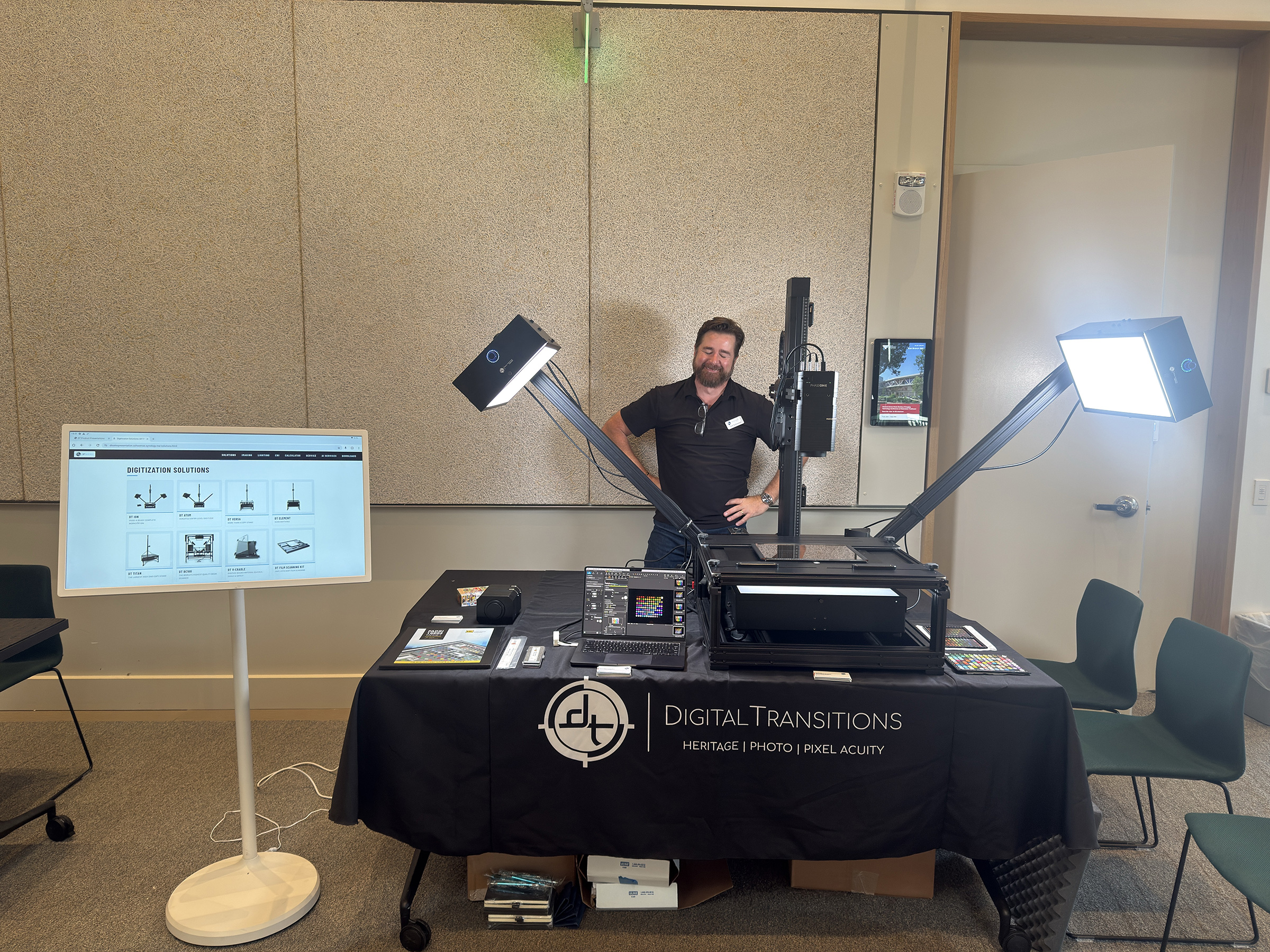
Rather than a static display, DT brought a fully functional setup: a Phase One iXH 150 and iXH 250 on a DT Atom copy stand, two Stellar MKII lighting panels, and a CNI transmissive light base configured for film scanning. It stayed powered on and running for the full run of the exhibit hall, and it also supported Doug’s course room — the same rig used for live demonstrations during Monday’s sessions.
That decision to bring working hardware instead of a poster and a laptop paid off. Interest in the iXH 250 and in CNI consistently traced back to people watching the system run rather than reading about it. CNI in particular became the most talked-about item at the table. The live demonstration — a color negative captured on the iXH 250, run through the Color Negative Film Calibration panel in DT Nexus, with the raw scan and the fully inverted, color-corrected result shown side by side — made the case for the workflow without needing much explanation. Six different institutions brought it up unprompted over the course of the show.
A Quick Lighting Experiment Worth Sharing
While at the show, Doug ran an informal comparison: the same film frames, captured on the same camera, once under a standard white LED source and once under an RGB LED source. The RGB capture produced noticeably stronger color, lower cross-channel noise, and more visible detail. It’s a small test, but it points to a larger point DT keeps coming back to — spectral quality of the light source matters as much as anything downstream in the workflow.
Where the Conversation Is Heading
Beyond DT’s own sessions, two themes ran through the week. AI was the most discussed topic at the conference by a wide margin, and, as noted above, the discussion has matured — this is now a field asking practical questions about ownership, vendor selection, and real collection use cases rather than whether the technology is worth paying attention to.
The second theme was a growing interest in lower-cost, more portable capture setups, including multispectral rigs and smartphone-based systems presented as legitimate tools rather than novelties. It’s a trend worth watching, and DT’s position on it is straightforward: the meaningful differentiator was never megapixel count or a lighting panel’s CCT rating. It’s spectral quality, measurable conformance to standards like FADGI, ISO 19264, and Metamorfoze, and whether a workflow produces the same result twice. That’s the technical foundation DT will keep building on and talking about at future shows.
Thank You, Boston
Thanks to Olivia Kuzio and the Getty for co-teaching the color profiling course, to Julie McVey and the National Geographic Society for bringing their perspective to the AI conversation, and to the IS&T Archiving community for another year of sharp questions and good conversations. Archiving 2026 wrapped with an optional behind-the-scenes tour extension in Portland, Maine — and DT is already looking ahead to the next opportunity to bring the gear, teach a course, and see what the field is building next.
Photos courtesy of Todd Schweikert.