
The Phase One iXH 250mp is shipping and one of its surprise features is Frame Averaging which greatly reduces noise in deep shadows. The user still clicks one button (or taps one foot pedal) and the camera still produces a single standard raw file. But the sensor reads out multiple times and averages those reads together so that the raw file produced is an average of those reads, which reduces noise.
For those using medium format sensors to do digitization shadow noise hasn’t been an issue for most materials for a decade or more. Modern medium format sensors are really good in terms of dynamic range and clean shadows. Moreover, most heritage material just doesn’t have that much physical dynamic range. For example, a medieval manuscript might have 6 stops of dynamic range, which places the shadow around L* of 13. Even a painting with deep black only adds another couple of stops of dynamic range, with deep shadows measuring L*=5.
But there is one type of heritage material that has challenging dynamic range: transmissive materials like photographic film. Some photographic materials like dense photographic slides or thickly coated glass plates can have dynamic ranges that place meaningful content at well below L* of 0.5. General purpose digitization systems are very noisy in such deep shadows.
As we discuss in the DT Digitization Guide for Transmissive Materials it is best practice to anchor the exposure of the digitized file to the naked light source so that all material is captured as it appears on the light table to the eye – that is, a dark slide is faithfully recorded as dark. So that noise can cause significant issues when you want to then create a derivative with the shadows brightened up for improved legibility.
See the Difference
Below is an example from the iXH 250mp using frame averaging to retain high-fidelity very deep into the shadows of an underexposed frame of E6 slide film.
NOTE: Typically photographic material is unloaded from its carrier/sleeve and imaged one at a time. That maximizes resolution, removes four surfaces on which dust might be sitting, and decreases any softening or flare from the sleeve. But as you’ll see in the below example the iXH 250mp has enough resolution that some institutions may choose to initially image some collections inside their sleeves knowing that this is at least 50 times faster and that some film collections are fading or starting to suffer from vinegar syndrome and may not be around long enough to image frames individually. In the below setup each slide is captured at around 2600x2600px – well below the FADGI 4 star standard our clients typically aim for, but more than enough resolution to make decent jpgs for finding aids for individual images, or even for a basic web image catalog or to use for AI cataloging.
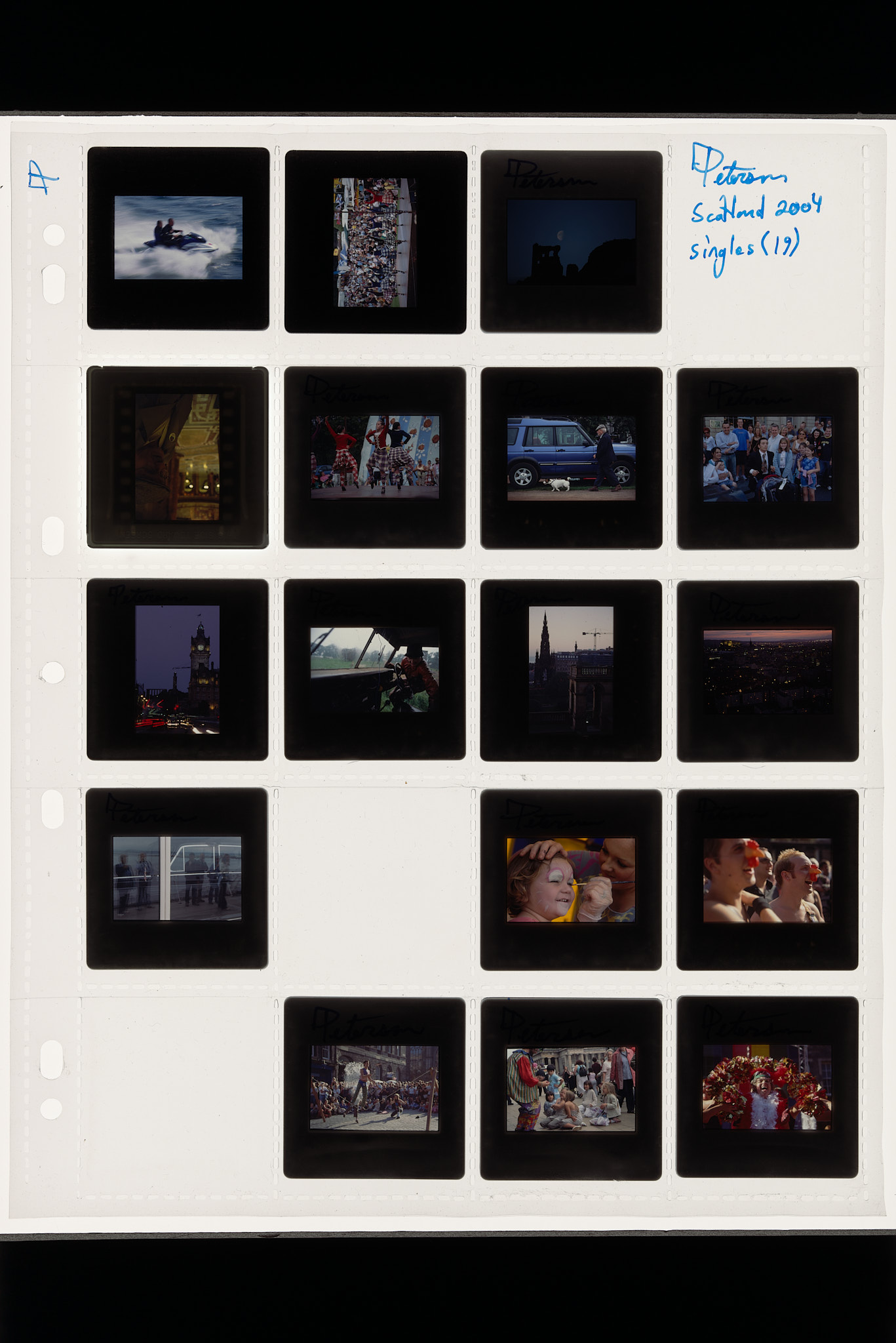
Here is the standard capture of the slide sheet. The exposure is set based on the naked light source so that even the very thin slide sheet plastic does not clip and the annotations on, and condition of, that sheet are faithfully recorded. This already places the exposure about one stop darker than if it were set based on the white point (DMin) of the slides. Notice that the image in the top right (third image of the top row) is extremely dark – its content barely legible at all.
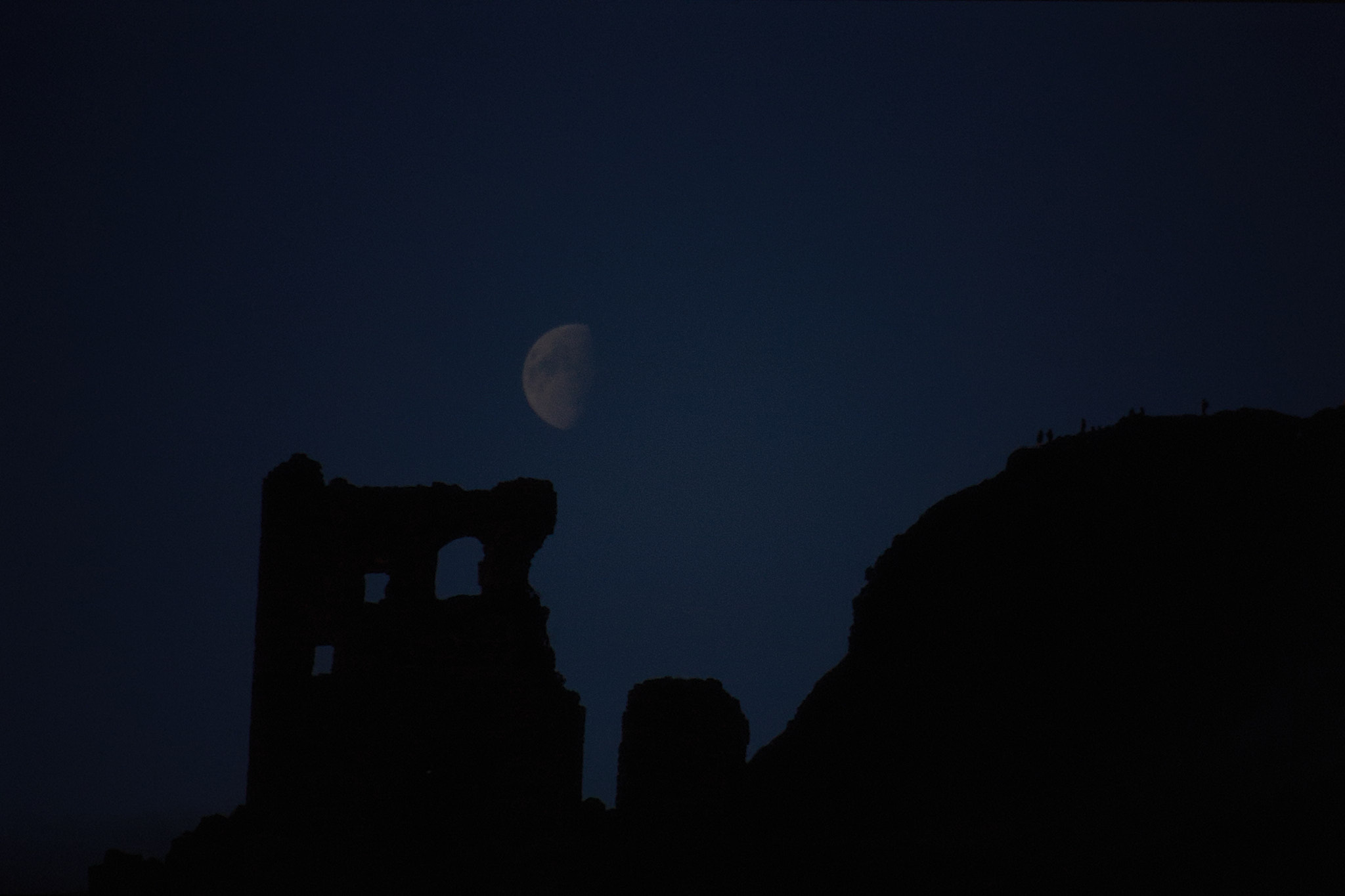
Here is that slide by itself. It’s a moonlit scene of St Margaret’s Loch with hikers visible on the right ridge. I can chastise the artist for the deep underexposure in this frame because that artist is me. But in fairness to myself, metering nighttime exposures on slide film is tough because of the reciprocity failure. Regardless the frame is faithfully shown here as very dark. So let’s boost the brightness by four stops…
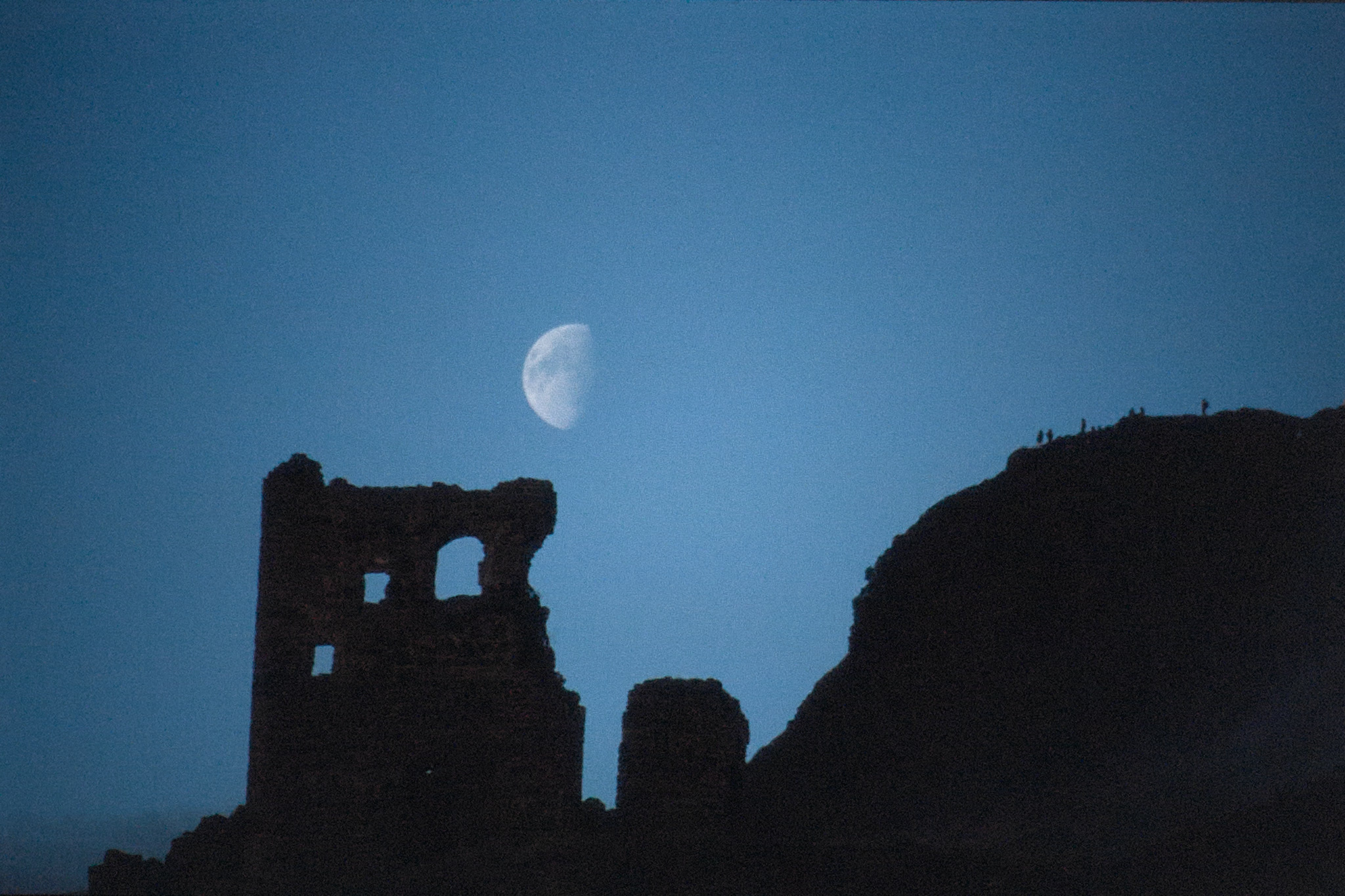
By pushing the digital file four stops we’re at the upper limits of what is possible with even the highest end digitization systems. There is noticeable noise in both the sky and the brickwork of the structure. But with film it can be hard to know if the noise is in the film (natural film grain) or the digitization equipment. So let’s turn on frame averaging…
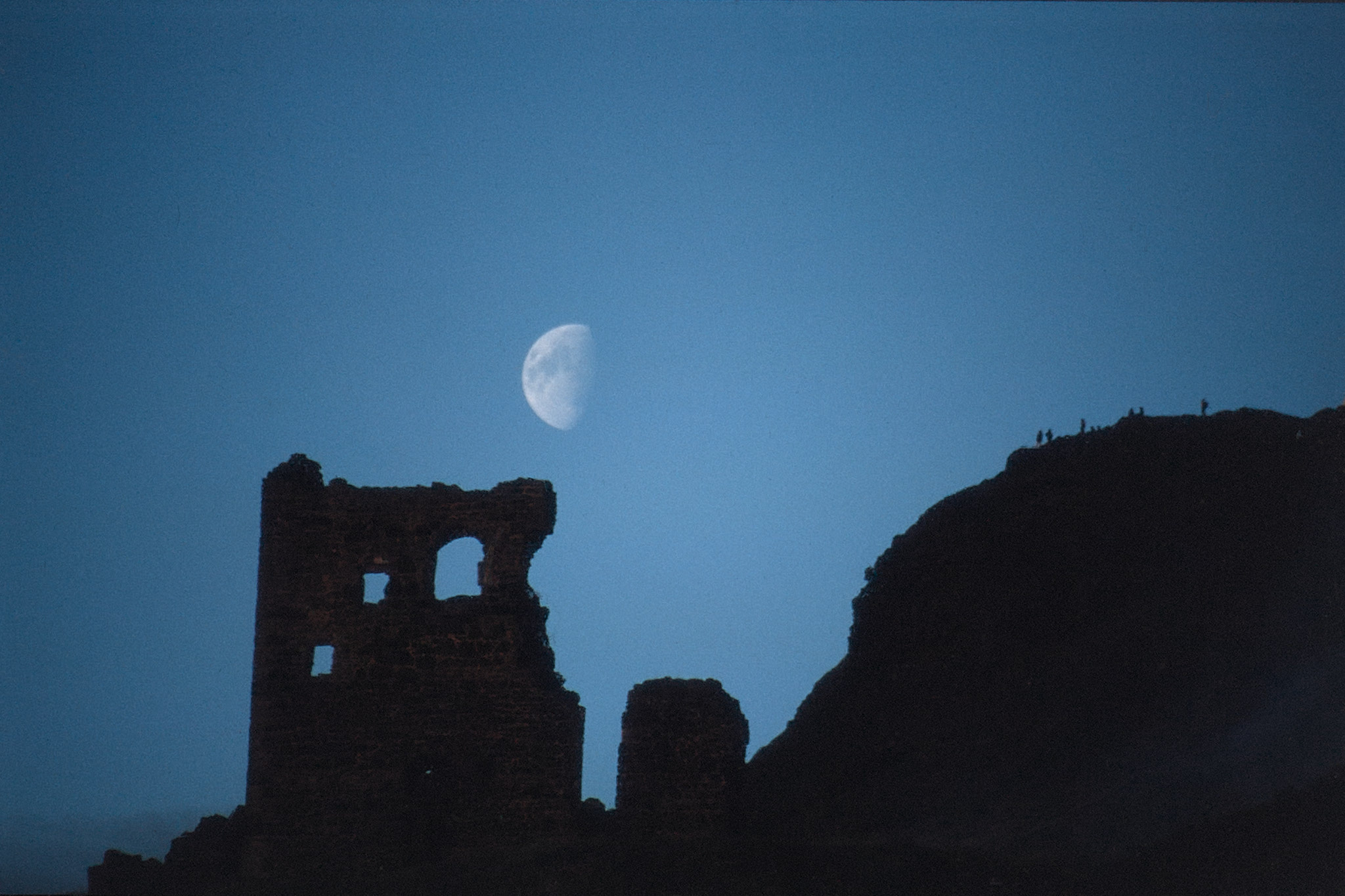
The frame averaging nearly eliminates all the digitization system noise, allowing us to see the natural film grain that was underneath it. This is still a single raw file, not HDR or tone mapping, but under the hood the iXH 250mp made 64 exposures back to back.
Looking Closer
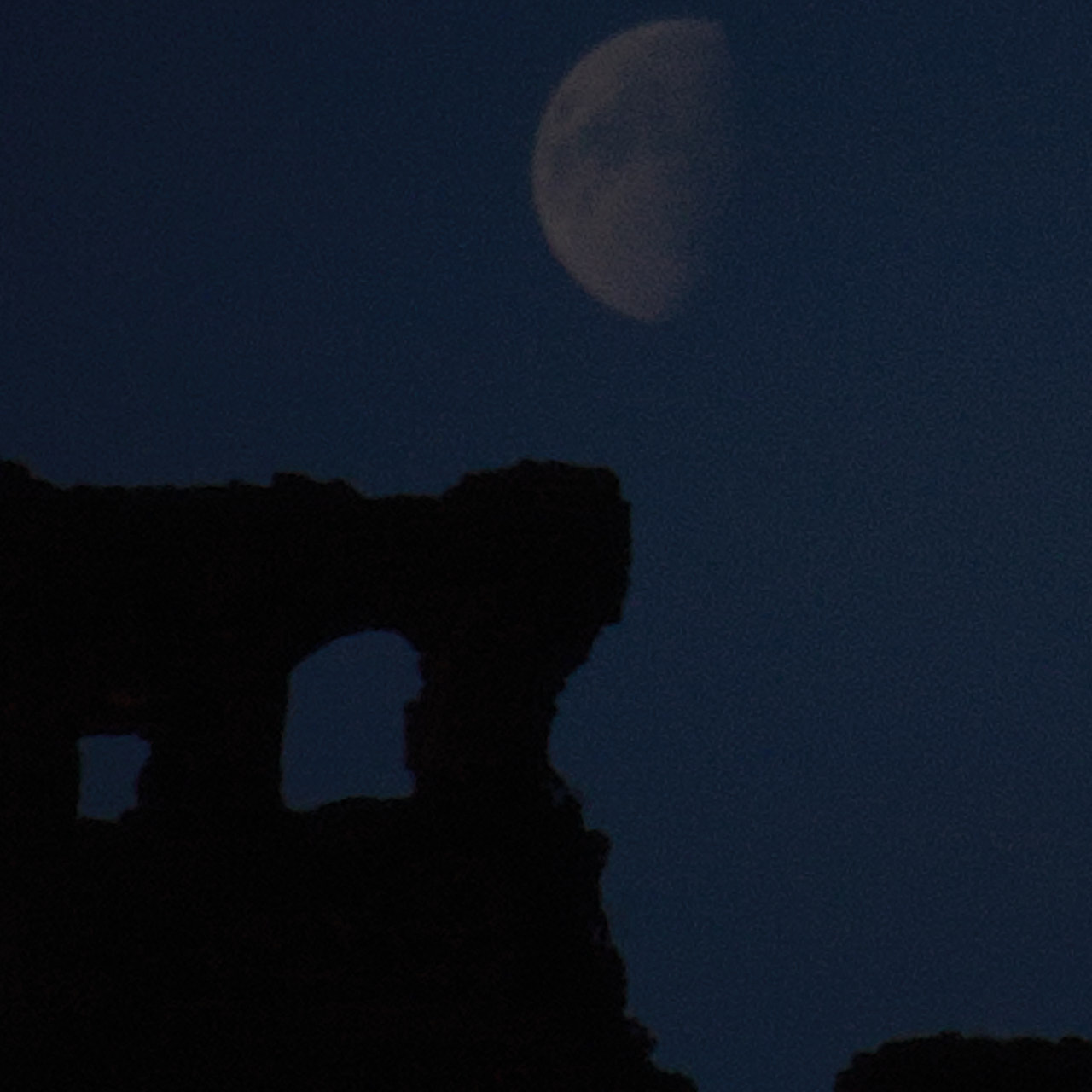
Cropping in to a smaller part of the frame at 400% and pushing the shadow slider, saturation, and curves to within an inch of their lives, and using a rather hefty 256-frame average. This level of effort is rather extreme – each capture takes 2.5 minutes – uncharacteristic of mass digitization. But it’s a nice test of just how far we can push the technique.
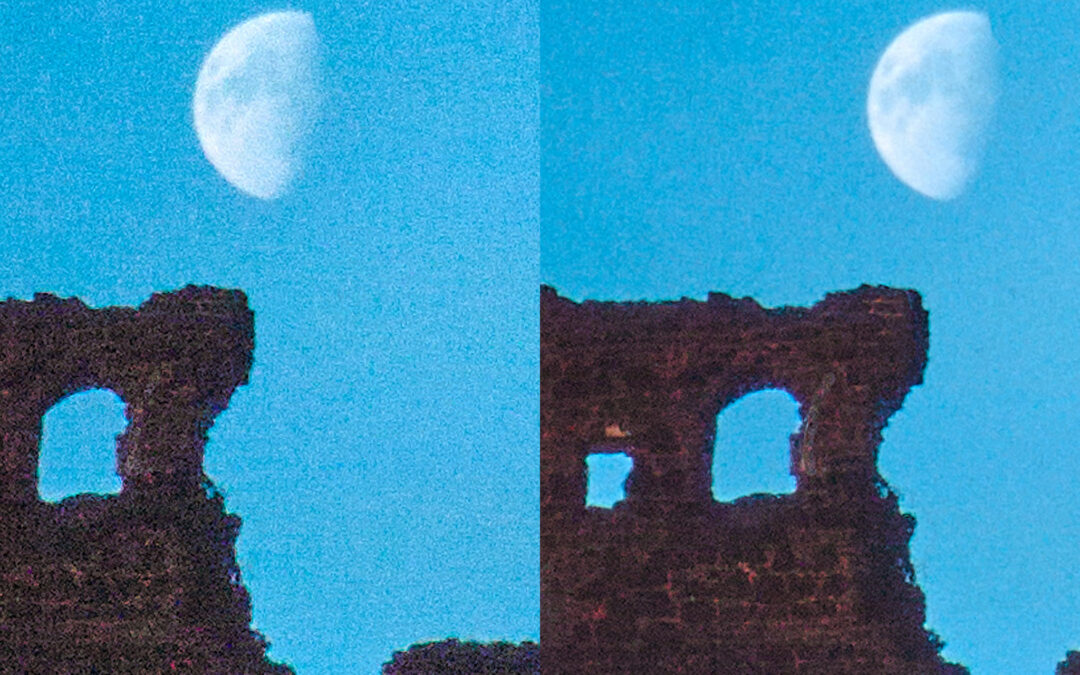
First a 400% view of the 1-frame exposure without adjustment (left) compared to the extreme shadow recovery (right):
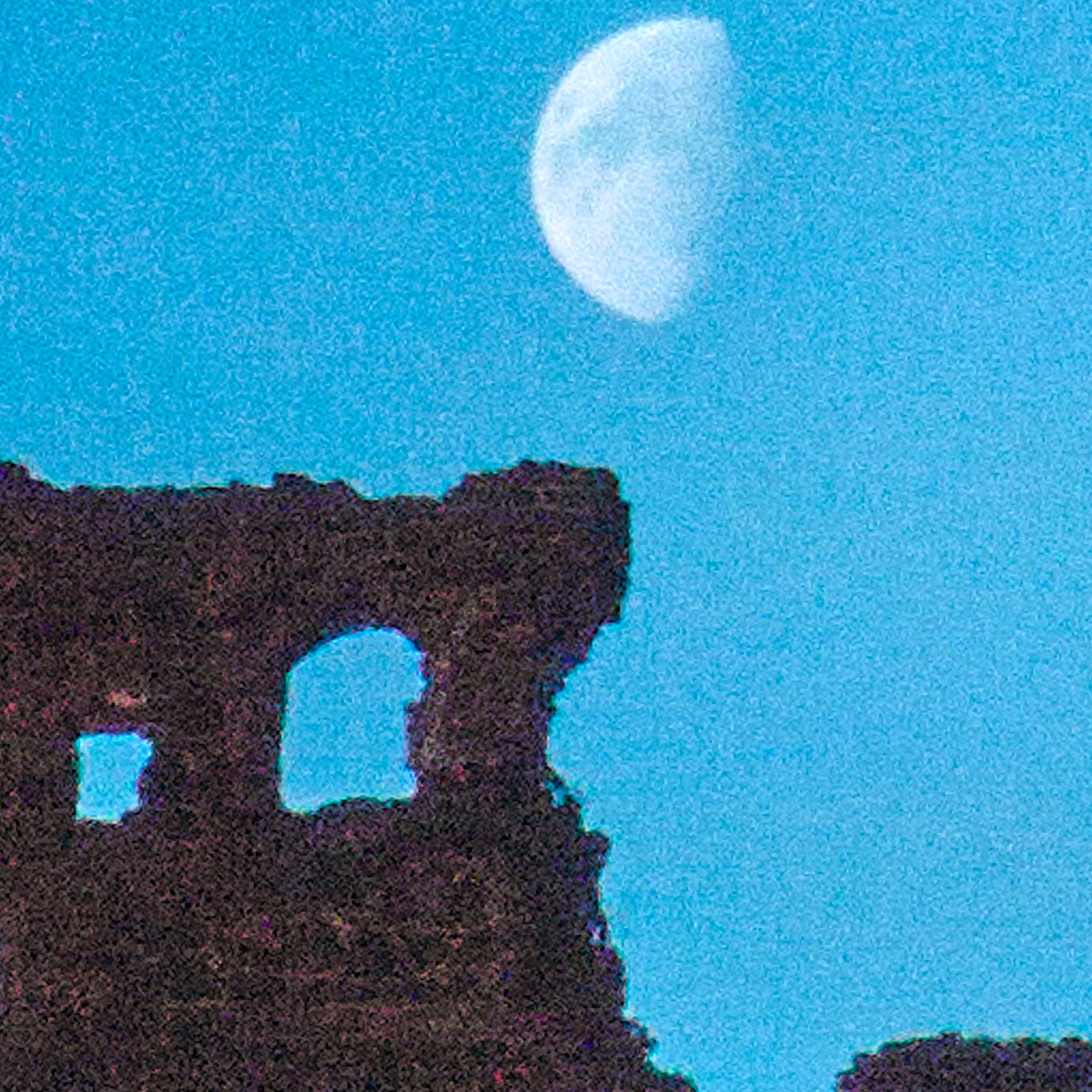
Now a 400% view of the 1-frame exposure with extreme shadow recovery (left) compared to the 256-frame average:
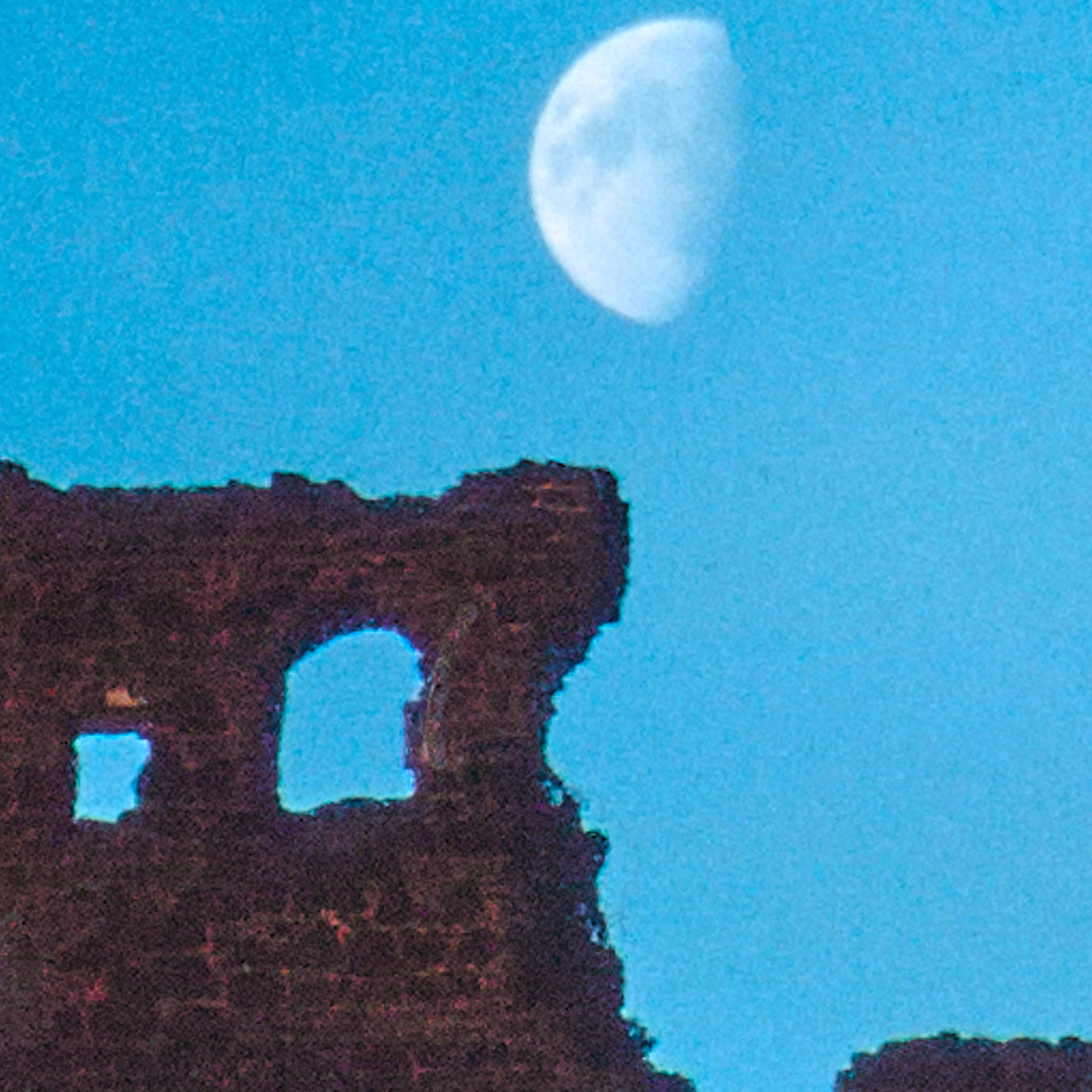
Maybe the most impressive thing is that the slide film contains sharp and color accurate detail of these deep red rocks on the shadow side of a nighttime sky lit by a half moon. But the improvement made using frame averaging is easily the second most impressive.
How Many Frames?
Frame averaging has no practical limit – you can set the iXH 250mp to average thousands of frames if you wish. But the practical returns decrease as you increase the number of frames. In the example above I choose a 64-frame-average which takes about 38 seconds to complete. But most of the benefit can be had with far fewer frames. Below for example is a 400% view of a comparison of 1, 4, 16, and 64 frames on another slide from this sheet. On the far left is the unadjusted image to remind us of just how deep in the shadows the image content is that we are recording. To my eye the 4-frame average, which only takes 3 seconds from click to screen, is already a significant improvement and has maybe half the subjective improvement made by the 64 frame average.
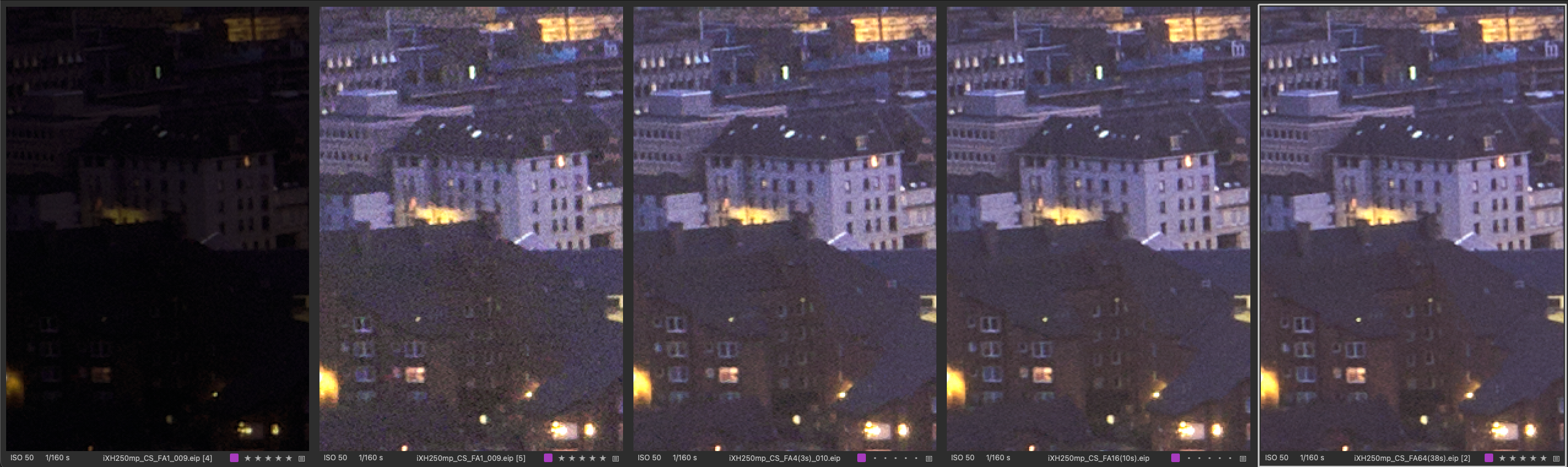
Comparison: Unadjusted, 1-frame, 4-frame, 16-frame, and 64-frame averages
Together with DT Nexus for automation such as transmissive color profiling and AI Crop of the image area or physical slide, a DT NTPT for emulsion-independent profiles, and the DT Stellar RGBW for historically authentic color negative digitization and inversion the iXH250mp is the clear flagship for the digitization of large and diverse historical film archives.
If you’d like to learn more, or see the iXH 250 in action with a person demo session, contact us.
P.S. Shout out to the Scotland Field School of the Ohio University Photojournalism program. It’s been a couple of decades, but it’s still impacting the art and science of my photography all these years later.